On-site group training for fitness businesses
FIRST AID & CPR TRAINING — AT YOUR GYM

Keep your team current without losing a full day to travel and off-site training.

4+ PEOPLE? WE COME TO YOU.

Your team completes the knowledge learning online first. We then come to your facility to complete the practical assessment with the group.

Gold Coast  •  Brisbane  •  Toowoomba  •  Darling Downs
Less disruption. More convenience.
4+
Minimum 4 participants Bring the practical session to your facility.
✓
Knowledge online first Staff complete the theory component before we arrive.
⌚
Approx. 2–2.5 hours Typical combined practical time for First Aid + CPR.
A simpler way to keep your team current
Your trainers are busy. First Aid and CPR still need to stay current.

Getting a whole team to an off-site course can mean juggling rosters, moving client bookings and losing productive time to travel.

AFHP's on-site model is designed for busy fitness businesses. Complete the knowledge component online, organise one convenient practical session, and we come to you.

Traditional group training can mean:
  • Travel to another training venue
  • Fixed course times that may not suit your roster
  • More time away from clients
  • Greater disruption across the working day
With AFHP on-site training:
  • Knowledge learning is completed online first
  • The practical assessment comes to your facility
  • Your team completes the session together
  • Travel and downtime are reduced
How it works
Three simple steps

We separate the knowledge learning from the practical assessment so your team can use its time more efficiently.

1
Learn online

Each participant completes the required knowledge learning online before the practical session.

2
We come to your facility

We arrange a practical session at your gym, studio or workplace at an agreed time.

3
Complete the practical

Your team completes the practical assessment together at your facility.

A better use of your team's time
How long does the practical take?

Much of the learning is completed before we arrive, allowing the on-site session to focus on practical skills and assessment.

CPR practical
~ 1 hr

HLTAID009 practical component

First Aid practical
+ 60–90 min

Additional practical time

Combined session
~ 2–2.5 hrs

Typical First Aid + CPR practical session

Practical session times are approximate and may vary depending on participant numbers and assessment requirements.
Nationally recognised training
The courses

Your team can complete CPR only or combine CPR with Provide First Aid.

HLTAID009
Provide cardiopulmonary resuscitation

Practical CPR skills for responding to a casualty requiring cardiopulmonary resuscitation.

Currency: CPR is generally refreshed every 12 months.

View CPR course information →
HLTAID011
Provide First Aid

Develop the skills and knowledge required to provide a first aid response in workplace and community settings.

Currency: First Aid is generally renewed every 3 years, with CPR refreshed annually.

View First Aid course information →
Why bring the training to you?
Designed around busy fitness businesses
✓
Less downtime

Reduce the amount of time your team spends away from the facility.

✓
Less travel

No need to send the whole team across town to another venue.

✓
Less disruption

Make it easier to plan the training around clients and staff rosters.

✓
One group booking

Organise training for multiple staff members at the same time.

✓
Maintain currency

Make regular First Aid and CPR refreshers easier to organise.

✓
Prepared staff

Help your team maintain practical skills for responding to an emergency.

Who is this for?
Not just big gyms.

If you have four or more people who need First Aid or CPR training, talk to us about bringing the practical session to your facility.

Commercial gyms Personal Training studios Pilates studios Yoga studios Functional fitness facilities Martial arts centres Sports clubs Recreation facilities
We come to you
On-site training across South East Queensland

We currently service fitness businesses across the following regions.

Gold Coast
Brisbane
Toowoomba
Darling Downs

Outside these areas? Ask us about availability for larger group bookings.

Ready to organise your team?
4+ PEOPLE? LET'S COME TO YOU.

Complete the enquiry form below and tell us where you are, how many people need training and whether you need CPR, First Aid + CPR, or you're not sure yet.

↓

REQUEST AN ON-SITE GROUP BOOKING

This field is required
This field is required Please enter a valid email address
This field is required Please enter a valid phone number

By submitting this form, you agree that AFHP may contact you about your enquiry.

Your information will be handled in accordance with our Privacy Policy.

NATIONAL FITNESS EDUCATION

National Training Courses

Obtain nationally accredited qualifications in the fitness industry.

Continuing Education Credits

Advance your career by improving your existing skills, or developing new ones.

Follow our Blogs
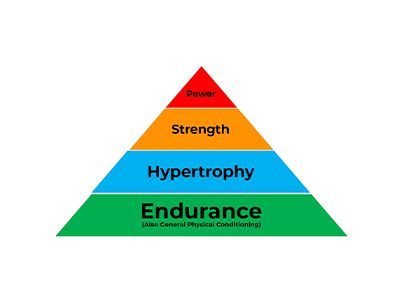
Strength Training Pyramid
By Jim Stubbs • May 8, 2024
Unlocking the Power of Resistance Training: Understanding the Strength Training Pyramid In the vast world of fitness, resistance training stands out as a cornerstone for achieving various fitness goals, from building strength and muscle mass to enhancing power and overall physical performance. At the core of effective resistance training lies the understanding of the strength training hierarchy pyramid, a fundamental concept that guides the structuring of workouts based on specific goals and desired outcomes. Resistance Training Hierarchy Imagine a pyramid, with its base representing the foundational aspects of fitness, such as endurance and general physical preparation, and its peak symbolising the pinnacle of performance – power. This hierarchical structure serves as a roadmap for designing training programs tailored to individual needs and objectives. Endurance and General Physical Preparation At the base of the pyramid lies endurance and general physical preparation. This level focuses on developing muscular endurance and overall conditioning. Workouts typically involve light loads, high repetitions (15-20 reps), and short rest periods (20-30 seconds). The emphasis here is on building stamina and laying a solid foundation for more advanced training phases. Hypertrophy Moving up the pyramid, we encounter hypertrophy training, aimed at increasing muscle size and volume. Moderate loads (70-80% 1RM) are utilised for moderate repetitions (8-12 reps) across 3-5 sets. Rest intervals range from 30 to 90 seconds. Hypertrophy training induces muscle growth through metabolic stress and mechanical tension, leading to noticeable gains in muscle size and definition. Strength Ascending further, we reach the strength phase, characterised by heavy loads (80-100% 1RM) and low to moderate repetitions (1-6 reps). Rest intervals are longer, typically lasting 2-5 minutes between sets. Strength training focuses on improving maximal strength, enhancing neuromuscular efficiency, and increasing muscle fibre recruitment. Power At the apex of the pyramid sits power training, which targets explosive strength and athletic performance. Workouts involve moderate to heavy loads (75-100% 1RM) for low to moderate repetitions (1-5 reps) across 3-5 sets. Rest periods are shorter compared to strength training, ranging from 2 to 3 minutes. Power training enhances the ability to generate force rapidly, translating into improved speed, agility, and power output. It's a continuum While the set and rep protocols outlined above provide a structured framework, it's essential to recognise that they are not set in stone. Individual factors such as age, body type, training history, and biomechanics play significant roles in determining optimal training parameters. Moreover, progression in resistance training is rarely linear, with individuals experiencing fluctuations in performance from day to day and week to week. Preparing for periods of slower progress is just as crucial as celebrating milestones. We are Built to be Lazy! Understanding that the body's default mode is to conserve energy underscores the importance of pushing beyond comfort zones and working close to muscular failure. Progressive overload – the gradual increase in training stimulus – is key to driving adaptations and achieving long-term results. Take Home Message The journey of resistance training is a dynamic and personalised process. It requires diligence, consistency, and an open-minded approach to experimentation and adaptation. Remember, what works for one person may not necessarily work for another. The key is to stay committed, make sure your clients listen to their body, and embrace the journey of self-improvement. W hether you have a seasoned athlete or a fitness enthusiast embarking on a new journey, remember to train smart, stay patient, and above all, enjoy the process of helping them become the best version of themselves! Visit AFHP.com.au to learn more about our courses!
A woman in a wonder woman costume is standing in front of a cloudy sky.
By Jim Stubbs • March 28, 2024
It's easy to fall into the trap of assuming that the best personal trainers are the ones who could grace the cover of a fitness magazine. But we’d like to challenge that notion. What truly makes a personal trainer exceptional?
A shirtless man is squatting on a barbell in a black and white photo.
By Jim Stubbs • March 18, 2024
When we talk about fitness goals, the term ‘body composition’ often arises, sometimes interchangeably with ‘losing weight.’ However, as fitness professionals, we understand that body composition encompasses far more than a number on a scale. It refers to the ratio of various components within the body, including water, muscle, fat, tissue, and bone. Defining this term is crucial because it guides our approach to exercise training and nutrition, ensuring that we tailor programs to meet our clients' specific needs and goals.
Show More